Sphagnum Moss vs Sheet Moss: Which Holds Humidity Better?
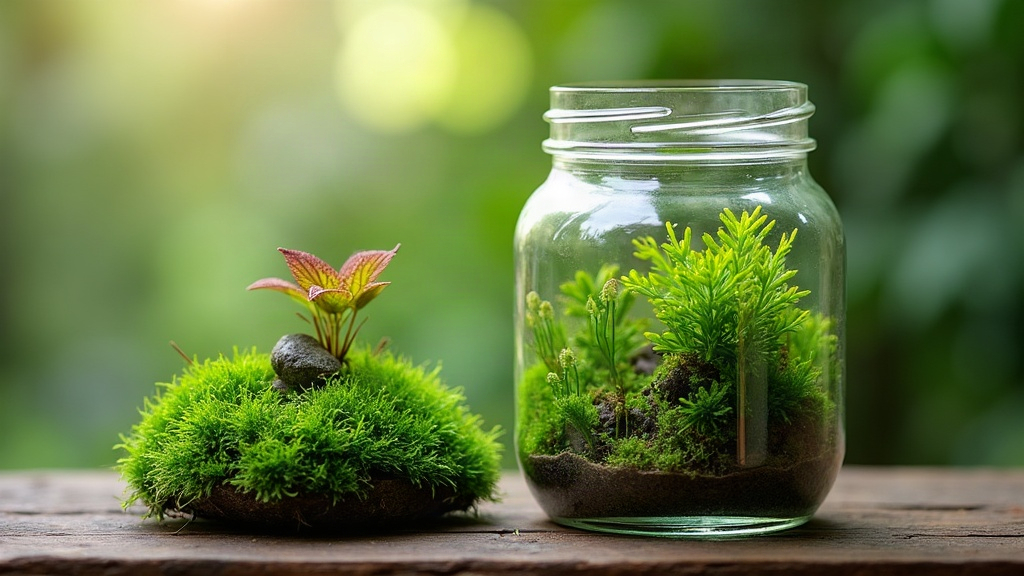
If you’re building a closed jar terrarium or vivarium, the moss you choose directly affects how well your ecosystem holds moisture. Short version: sphagnum moss retains and releases humidity more consistently and resists mold longer, while sheet moss looks more natural and supports live plant growth better, but it dries out or rots faster once the lid goes on. Which one you pick really comes down to whether you care more about long-term stability or how the thing actually looks on your shelf.
Why Moss Matters in a Closed Jar
A closed jar terrarium is basically a tiny water cycle running in a glass box. Moisture evaporates off the soil and plants, hits the cooler glass, condenses, and drips back down. Moss sits right in the middle of that cycle, soaking up extra water when things get wet and releasing it slowly as the jar dries out. Get the moss choice wrong and you’ll end up with one of two bad outcomes: a swampy, mold-friendly mess, or a jar that dries out between condensation cycles and stresses your plants.
Sphagnum Moss: The Humidity Workhorse
Sphagnum moss (usually bought dried and rehydrated before use) is the go-to in the terrarium and carnivorous plant world for one simple reason: its cell structure can hold roughly 20 times its own dry weight in water. That’s a staggering sponge effect, and it’s why growers of Venus flytraps and sundews have relied on it for decades.
Pros:
- Superior water retention — keeps humidity stable in a sealed jar for weeks with almost no babysitting
- Naturally antimicrobial — it contains compounds that slow down bacteria and fungi, so mold shows up less often than with other organic fillers
- Slow to break down — it won’t rot and foul your little ecosystem anytime soon
- Solid base layer — a lot of builders use it under the soil, or as a false bottom, to wick moisture evenly through the jar
Cons:
- Doesn’t look especially “alive” — it’s generally used dried or preserved rather than as a growing green carpet
- Can compact and get dense over time, which chokes off airflow if you pack it too tight
- Genuine dried sphagnum (not the peat stuff) costs more per volume than you’d expect
Sheet Moss: The Living Carpet
Sheet moss is harvested in flat mats, often Hypnum or something similar, and it’s what builders use to carpet terrarium floors, logs, and hardscape to get that lush, forest-floor look.
Pros:
- Best aesthetic by far — this is the moss that makes a terrarium actually look like a tiny forest
- Can stay alive and keep growing given the right light and moisture, so your terrarium evolves instead of staying static
- Diffuses humidity nicely at the surface, spreading moisture evenly across the floor of the enclosure
Cons:
- Holds much less water than sphagnum, so it dries out fast if humidity dips even slightly
- More prone to mold and rot in a fully sealed jar, especially one without airflow or a day/night light cycle
- Usually wild-harvested, meaning it can bring hitchhikers: fungus gnats, mystery fungus, random spores you didn’t ask for
- Needs more light than most closed jars get sitting on a shelf; without it, the green fades fast
Head-to-Head Comparison
| Factor | Sphagnum Moss | Sheet Moss |
|---|---|---|
| Humidity retention | Excellent (long-term buffer) | Moderate (surface-level) |
| Mold resistance | High | Lower |
| Visual appeal | Functional, less decorative | Highly decorative |
| Longevity in sealed jar | Weeks to months | Days to weeks without care |
| Best use | Base layer, moisture wick | Top layer, visible carpet |
| Light requirement | Minimal | Moderate to grow actively |
Which Should You Use?
Honestly? For most closed jar builds, the answer is both, layered the right way.
- Bottom layer: sphagnum moss (or a drainage layer topped with sphagnum) to regulate moisture and keep things from turning into a swamp.
- Top/visible layer: sheet moss for the look, placed somewhere it’ll catch at least a little ambient or grow light.
Jar sitting in a dim corner, or you just want something you can forget about for a month? Go all-in on sphagnum. It’s forgiving, and it won’t turn into a slimy puddle the moment you look away. Jar on a bright windowsill or under a grow light, and you don’t mind checking on it now and then? Sheet moss will make it look far more like a real miniature landscape.
Common Mistakes to Avoid
- Tossing in fresh, unrinsed sheet moss straight from your backyard. Rinse it well, and quarantine or bake it first to kill off any hitchhiking pests before it goes in a sealed jar.
- Drowning your sphagnum. You want it damp, like a wrung-out sponge, not dripping wet.
- Sealing the lid tight on a sheet-moss jar with zero ventilation. Even “closed” terrariums do better with the lid cracked open occasionally to avoid anaerobic rot setting in.
Conclusion
Sphagnum moss wins on raw humidity control and low maintenance, which makes it the safer pick for a strictly closed jar. Sheet moss wins on looks and that living, breathing quality, but it asks for more light and more attention in return. Do both: let sphagnum handle the moisture reservoir underneath, and let sheet moss be the green, living face of the terrarium on top.