Dwarf White Isopods vs Springtails for Terrarium Cleanup Crew
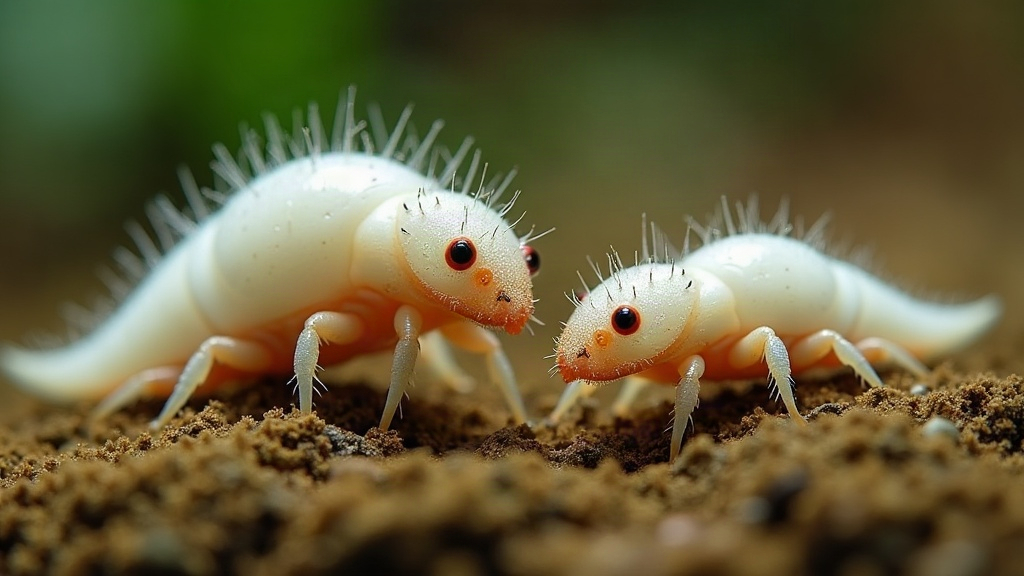
If you’re setting up a closed, bioactive terrarium, the real question isn’t “dwarf white isopods or springtails.” It’s understanding what each one actually does, so you can figure out whether you need one, the other, or both. Dwarf white isopods (Trichorhoeus spinulosus) are good at breaking down the bigger stuff: feces, shed skin, dead plant matter. Springtails (Collembola), on the other hand, handle mold and microbial film that builds up on soil surfaces and glass. Most tanks that actually thrive long-term run both.
Why a Cleanup Crew Matters in a Closed System
A closed terrarium has no drainage and barely any airflow. That means waste, dead leaves, and fungal growth pile up fast, faster than most people expect the first time they try bioactive. Skip the cleanup crew and you’ll likely run into:
- Mold blooms across the substrate or glass
- Ammonia buildup from decomposing waste
- A soured, anaerobic substrate that kills plant roots within weeks
A cleanup crew (CUC) of isopods and/or springtails processes this organic matter into harmless byproducts. That’s what keeps the whole bioactive cycle balanced without you having to intervene every few days.
Dwarf White Isopods: The Heavy-Duty Decomposers
Dwarf whites are tiny, 2-3mm, fast-breeding, and they burrow constantly through the substrate. Here’s where they shine:
- Process bulkier waste: feces, dead insects, rotting fruit, shed exoskeletons
- Aerate soil: all that tunneling stops substrate from compacting into a solid brick
- Reproduce quickly: a healthy culture can double in a matter of weeks given decent humidity and food
- Tolerate high humidity really well, which makes them a natural fit for closed, moisture-heavy setups
Where they fall short:
- They’re not nearly as efficient at tackling surface mold or biofilm as springtails are
- You’ll see them on the glass and substrate, which some keepers find distracting (though honestly, most people end up liking it, they’re oddly fun to watch)
- A culture can crash if the substrate dries out or ventilation runs too high
Springtails: The Mold and Microfilm Specialists
Springtails are the tiny ones, under 2mm, and they spring (literally) through surface leaf litter and soil. Their strong points:
- Control mold and fungal film, which shows up constantly in new closed terrariums during the “cycling” phase
- Feed on decaying plant matter and fungal spores, which keeps fungal overgrowth in check
- Reproduce explosively under good conditions, so populations bounce back fast after a dip
- Nearly invisible most of the time, only surfacing when mold appears, which is great if you want a cleaner-looking display
The downsides:
- They don’t handle larger solid waste like feces nearly as well as isopods
- Populations can crash hard if mold temporarily runs out as a food source
- Because they’re so small, it’s genuinely hard to gauge whether the population is healthy just by looking
Head-to-Head Comparison
| Factor | Dwarf White Isopods | Springtails |
|---|---|---|
| Waste type handled | Solid waste, dead matter | Mold, fungal film, microbes |
| Visibility | Easily visible | Mostly hidden |
| Reproduction speed | Moderate-fast | Very fast |
| Humidity tolerance | High (needs consistent moisture) | High, tolerates fluctuation better |
| Best for | Feeding residue, larger bioloads | New tank mold control, surface hygiene |
| Substrate depth preference | Deeper, burrowing | Surface and leaf litter |
Which One Should You Choose?
Isopods alone make sense if your terrarium has no live feeders being dropped in and not much plant decay happening, say, a display-only paludarium with a light bioload.
Springtails alone work if you’re cycling a brand-new closed terrarium and the main thing you need right now is mold control before any larger fauna goes in.
Both together is really the answer for almost every bioactive closed terrarium out there, including ones housing dart frogs, isopod-dependent reptiles, or jumping spiders. They occupy different niches and barely compete for resources. A solid starter ratio: 20-30 isopods plus a springtail culture, added about two weeks before you introduce any animals, so the springtails have time to establish and start knocking down mold.
Setup Tips for a Combined Cleanup Crew
- Add springtails first, a week or two before the isopods, so mold is already under control by the time isopods go in.
- Lay down leaf litter (oak, magnolia, or catappa work well), since both species rely on it for food and shelter.
- Feed supplementally: fish flakes or powdered algae for the springtails; fruit, veggies, or a bit of dog kibble for the isopods, once a week, small amounts only.
- Keep humidity in the 70-90% range. Both populations basically stall out once things get too dry.
- Skip pesticides and treated substrate entirely. Either one will wipe your cleanup crew out completely, no exceptions.
Conclusion
Dwarf white isopods and springtails aren’t really competing for the same job, they’re specialists working different angles. Isopods grind through the bulky waste and keep the substrate loose; springtails handle mold and microbial film right at the surface. If you want a closed terrarium that genuinely runs itself, don’t bother picking one over the other. Seed both from day one. It’s a small upfront investment, and it pays off for years in the form of a cleaner, healthier tank that doesn’t demand constant babysitting.