Why Are My Terrarium Springtails Dying Off After a Few Weeks
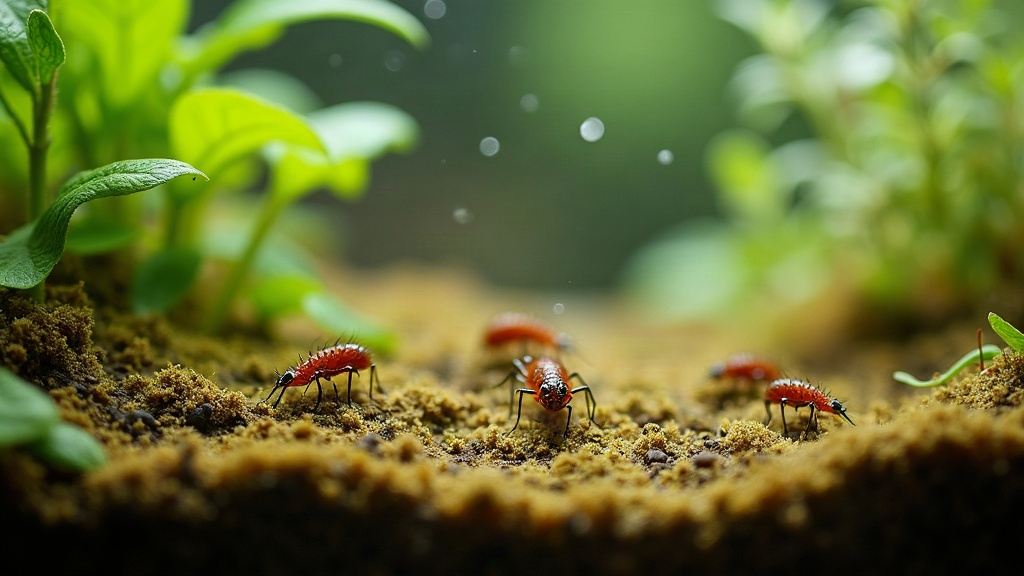
If your springtails did fine for the first week or two and then started disappearing, you’re dealing with one (or more) of the usual suspects: moisture that’s off balance, mold that got out of hand, not enough food, stale air, or some other pest muscling in on their territory. It’s rarely just one thing. Usually it’s two or three small issues stacking up until the colony tips over. Let’s walk through how to figure out what’s actually going on.
1. Moisture Is Off (Too Wet or Too Dry)
Springtails breathe through their skin, which means humidity isn’t just a comfort thing for them, it’s survival. They need damp, not drenched.
Signs of too dry:
- The substrate surface looks pale, crumbly, or starts to crack
- You’ll see them bunched up near the glass or wherever moisture collects
- Numbers drop fast, sometimes within just a few days of a dry stretch
Signs of too wet:
- Water pooling at the bottom of the enclosure
- A sour, swampy smell that wasn’t there before
- Mold spreading fast (more on that next)
Fix: Mist lightly every day or two instead of drenching the whole thing at once. You’re aiming for substrate that feels like a wrung-out sponge, damp but not dripping, with at least one drier zone somewhere in the enclosure so the springtails can move toward whatever humidity suits them. If you’re tired of guessing, a cheap hygrometer takes the uncertainty out of it.
2. Mold Took Over the Food Supply
A thin layer of white mold isn’t a problem on its own, springtails actually graze on it. The trouble starts when mold explodes, which usually happens right after you’ve added fresh fish food, a sprinkle of yeast, or a chunk of fruit. At that point it can smother the colony outright, and some fungal strains are genuinely toxic to them.
Fix:
- Feed in small pinches, not handfuls
- Pull out anything uneaten after 24 to 48 hours
- Bump up airflow a little to keep fungus from taking off
- If mold has already gotten bad, do a partial substrate swap rather than tearing the whole enclosure down
3. They’re Starving
In the wild, springtails live on decaying matter, fungi, and biofilm. A brand-new bioactive setup just hasn’t built up enough of that yet, so a growing colony can run out of food fast.
What to feed:
- A small pinch of fish flakes
- Bee pollen
- Powdered spirulina
- A tiny piece of mushroom
Feed every 3 to 5 days, and keep portions modest. Too much food and you’re back to the mold problem above; too little and the colony starves. It’s a balancing act, and it gets easier once the terrarium has had time to mature.
4. Poor Ventilation or Gas Buildup
A tank that’s sealed too tight, or just overly humid, can trap ammonia and CO2 from decomposing waste. In high enough concentrations, that buildup is genuinely harmful to springtails.
Fix: Crack the lid now and then, or make sure your enclosure has mesh ventilation built in. Both isopods and springtails do better with a little airflow moving through, even in setups that run on the humid side.
5. Competing Pests or Predators
Mites, ants, or just too many isopods can crowd springtails out of the food supply, or go after them directly.
Check for:
- Tiny, fast-darting mites (their movement is quicker and jerkier than a springtail’s hop)
- Ant trails, which are bad news, a single ant scout can lead to a wiped-out culture in a matter of days
- Isopod colonies that have gotten so dense they’re eating through all the available food before springtails get a share
Fix: Quarantine and inspect anything new before it goes into an established tank. If you spot ants, don’t try to treat the main enclosure directly, seal it up fully and deal with the ant problem separately.
6. The Culture Was Too Small to Begin With
Small starter cultures, especially the tiny vials you get shipped online, are fragile by nature. Anything under a few hundred individuals can crash from ordinary environmental stress before it ever gets the chance to stabilize.
Fix: When you’re starting from scratch, go generous with your initial population, and give it 2 to 3 weeks in a separate culture container to establish itself before moving any of it into the display terrarium.
Quick Troubleshooting Checklist
- ✅ Substrate damp but not waterlogged
- ✅ Visible but not excessive mold
- ✅ Small, regular feedings (not large dumps)
- ✅ Adequate ventilation
- ✅ No mites or ants present
- ✅ Starting population was large enough
Conclusion
A die-off a few weeks into a new setup is almost never some mystery illness, it’s an environmental mismatch, plain and simple. Start by checking moisture, then look at your feeding habits, then scan for pests muscling in. Once humidity and food settle into a rhythm, springtail numbers usually climb back within two to three weeks. Bioactive setups just need a little time to find their footing.