Why Your Miniature Boston Fern Is Turning Pale in a Sealed Terrarium
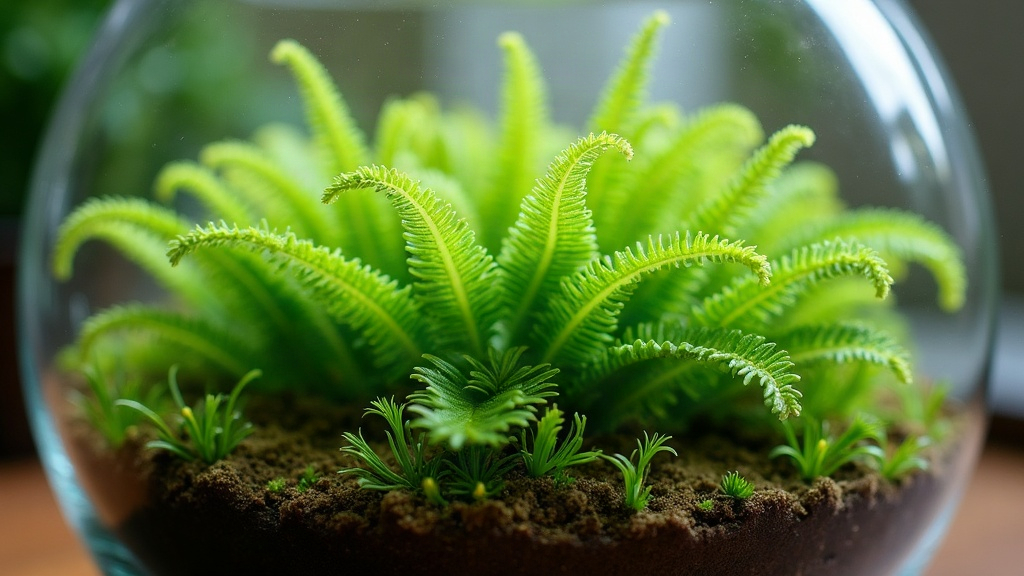
If your miniature Boston fern has gone pale, washed-out, or that sickly yellow-green inside its sealed terrarium, you’re dealing with one of three usual suspects: not enough light, a substrate that’s run out of nutrients, or a humidity/airflow balance that’s actually working against the plant instead of helping it. Here’s the reassuring part. Of all the terrarium problems you could run into, this one is genuinely fixable, as long as you know where to look.
Why Sealed Terrariums Are Different
A closed terrarium runs on its own little weather system. Water evaporates, hits the glass, condenses, and drips back down onto the soil. That’s fantastic for keeping humidity steady, but it does nothing to top up nutrients or sunlight. An open pot on a windowsill can dry out between waterings or lean toward a brighter patch of light. A sealed fern doesn’t get either option. Whatever would be a minor annoyance in open air turns into a real problem once you seal the lid.
Common Reasons for Pale Boston Fern Fronds
1. Not enough light, or the wrong kind
Boston ferns tolerate shade, they don’t thrive on it. That’s an important distinction. Inside glass, the light that does reach the plant gets weaker still, thanks to reflection off the walls and the fact that you’ve probably (wisely) kept the terrarium out of direct sun, since direct sun would cook a sealed container in no time.
- Symptoms: pale green to yellow-green fronds, especially on new growth; foliage that looks thin and leggy, stretching toward one side of the glass.
- Fix: Move the terrarium somewhere with bright, indirect light, a few feet back from an east or north-facing window works well. If the room just doesn’t get enough natural light, add a small LED grow light for 8-10 hours a day. Skip direct sun entirely, it will scorch the fronds right through the glass.
2. Depleted nutrients in the substrate
Terrarium soil mixes are usually kept nutrient-light on purpose, mainly to keep mold and runaway growth in check. But ferns are moderate feeders over the long haul, and in a closed system there’s no rain, no repotting, nothing to replenish what the plant uses up.
- Symptoms: an overall pale cast across the whole plant, growth that’s slowed to a crawl or stopped altogether, older fronds yellowing before the new ones do.
- Fix: Feed with a diluted liquid fertilizer (quarter-strength) every 4-6 weeks during the growing season. Use a long-spouted applicator so you’re not soaking the foliage in the process. And never go full-strength in a closed terrarium. There’s nowhere for the excess to drain, so it just accumulates and causes its own problems.
3. Too much humidity, not enough airflow
Here’s the counterintuitive bit: a terrarium that’s too wet can produce the exact same pale, weak growth as one that’s too dry. Roots sitting in constant saturation basically suffocate, and the fungal issues that follow cut down on chlorophyll production.
- Symptoms: fronds that look pale, soft, almost mushy; condensation on the glass that never fully clears; a musty smell when you crack the lid.
- Fix: Open the lid for an hour a day to swap stale, damp air for fresh. Check that the drainage layer underneath (gravel plus activated charcoal) isn’t sitting in standing water. If the glass stays fogged all day without clearing, that’s your sign to ease off watering for a week.
4. Temperature stress
Boston ferns are happiest between 60-75°F (15-24°C). A terrarium parked near a radiator, a heat vent, or a sun-baked windowsill can climb well past that range, bleaching the fronds the same way sunburn would.
- Fix: Move it away from heat sources, and keep a cheap thermometer inside for a week or two just to confirm it’s staying in range.
Step-by-Step Fix
- Start with light, it’s the number one cause by far. Use a light meter app, or just do the simple test: could you comfortably read a book at that spot without flipping on a lamp? If not, it’s too dim for the fern.
- Look at the soil and roots next. Pale fronds across the board, paired with a month or more of stalled growth, usually point to nutrient depletion.
- Crack the lid and check the moisture situation. Nonstop fogging or a swampy smell means humidity is the culprit.
- Change one thing at a time. Terrariums are slow to react, give any adjustment 2-3 weeks before deciding whether it worked.
What Healthy Recovery Looks Like
New fronds should come in noticeably richer green than the old pale ones, typically within 3-4 weeks of fixing the light or feeding schedule. The pale fronds already there won’t recover their color, though, so once you see fresh healthy growth coming in, trim the old ones back. That redirects the plant’s energy where it actually counts.
Conclusion
A pale Boston fern in a sealed terrarium almost always comes down to one of three things: not enough light, nutrient-starved soil, or humidity that’s drowning the roots. Work through it methodically, change one variable, wait, watch, then adjust again if needed. Get the light right and feed it lightly once in a while, and you should see that fern’s fronds back to a deep, glossy green within about a month.