Why Your Nerve Plant Is Wilting in a Closed Terrarium
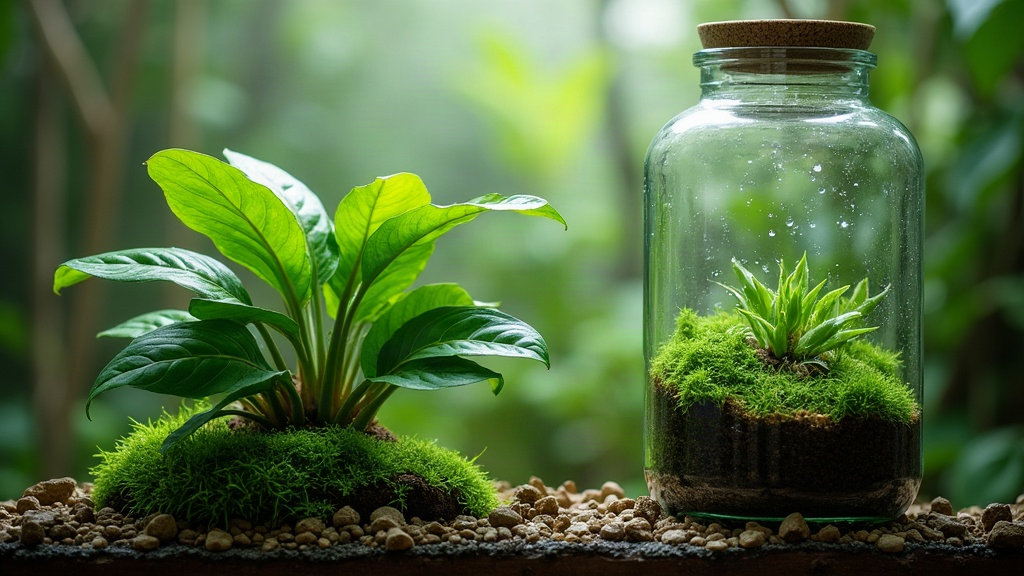
If your nerve plant (Fittonia albivenis) is drooping even though your closed terrarium reads close to 100% humidity, don’t reach for the watering can. The real problem is almost never moisture. It’s usually root rot, stale air, too much light, or roots that simply can’t pull water up fast enough anymore. High humidity keeps the leaves from drying out, sure, but it does nothing for a root zone that’s rotting or suffocating underground, and that’s where most wilting in sealed setups actually starts.
Why “High Humidity” Doesn’t Guarantee a Healthy Nerve Plant
Nerve plants have a reputation for collapsing dramatically the second they get thirsty. In a closed terrarium, though, thirst is almost never what’s happening. When you see wilting in a humid enclosure, it means something has broken the connection between the roots and the leaves above. There’s plenty of water around, the plant just can’t get it where it needs to go.
Here’s a simple way to picture it: humidity stops leaves from losing water into the air, but it can’t do a thing for roots that are rotting, compacted, or starved of oxygen down in the soil.
Top Causes of Wilting in a Humid Closed Terrarium
1. Root Rot From Overwatering
This is, by far, the most common reason. Closed terrariums hold onto moisture much longer than an open pot ever would, so the surface might look fine while the root ball underneath is sitting in a swamp.
Signs of root rot:
- Mushy, dark brown stems right at the soil line
- A sour, almost sulfur-like smell when you poke around in the substrate
- Leaves that wilt even though the soil is clearly, visibly wet
Fix: Pull the plant out, snip away any black or mushy roots with sterile scissors, and repot into fresh, well-draining substrate sitting on a proper drainage layer (LECA, gravel, or activated charcoal).
2. Poor Substrate Drainage
No drainage layer means excess water just pools at the bottom of the container and keeps the roots sitting wet indefinitely. Plain potting soil is a bad choice here too; in a sealed, low-evaporation box it compacts down and chokes the roots.
Fix: Layer it properly from the bottom up: 1-2 inches of gravel or LECA, then a mesh or charcoal barrier so soil doesn’t wash down into it, then a loose, airy terrarium mix (soil plus perlite plus orchid bark).
3. Lack of Airflow (Stagnant Air Syndrome)
A fully sealed terrarium with zero ventilation lets oxygen-poor, stagnant air settle right at the soil surface. Roots need oxygen almost as much as they need water, and once things go anaerobic down there, they stress and die fast.
Fix: Crack the lid for 15-30 minutes a day, or pick a terrarium with small built-in vents. Even a narrow gap makes a real difference in gas exchange without tanking your humidity.
4. Too Much Direct or Intense Light
Nerve plants want bright, indirect light, but put that light behind glass and the intensity (and heat) gets magnified, basically turning the container into a mini greenhouse. The plant starts losing water through its leaves faster than its compromised roots can replace it, and you get wilting even though the air inside is practically saturated.
Fix: Move the terrarium a few feet away from any direct sun, or switch to a diffused grow light meant for low-to-medium light plants. Keep an eye on the condensation, too: heavy fogging around midday is usually a sign of too much heat building up inside.
5. Transplant Shock or Fresh Cuttings
Just repotted the plant or started with an unrooted cutting? Some wilting is completely normal while new roots form. Give it 1-2 weeks; if humidity and substrate are right, it should bounce back on its own.
6. Fungal or Bacterial Infection
A constantly damp, poorly ventilated terrarium is basically a petri dish for pathogens like Pythium or Fusarium. These attack the roots and stems directly, and they’ll cause wilting no matter how humid the air is.
Fix: Cut away any affected tissue right away, boost airflow, and consider a diluted (3%) hydrogen peroxide soil drench to knock back the pathogen load.
A Quick Diagnostic Checklist
- Gently tug the stem near the soil line, does it feel soft or mushy? → Root rot.
- Does the substrate smell sour when disturbed? → Anaerobic conditions, likely rot.
- Heavy condensation all the time with no ventilation? → Airflow problem.
- Sitting in direct sun for more than an hour a day? → Light and heat stress.
- Potted or propagated within the last two weeks? → Probably just transplant shock. Give it time.
Prevention Tips for Long-Term Success
- Always build in a drainage layer for closed terrariums. No shortcuts here.
- Go easy on the watering can. Closed systems need far less water than open pots.
- Vent it briefly every single day, even a “sealed” design benefits.
- Use a chunky, well-aerated substrate mix, not dense bagged potting soil.
- Keep the terrarium in bright, indirect light, nothing direct.
Conclusion
A wilting nerve plant in a steamy, humid terrarium is a textbook case of healthy-looking air hiding unhealthy roots. More moisture won’t fix it. Better drainage, real airflow, and smarter light placement will. Check the roots first, fix the substrate and ventilation, and most Fittonia plants perk back up within a week or two once conditions actually improve.