Growing Miniature Selaginella Uncinata in a Low-Light Jar
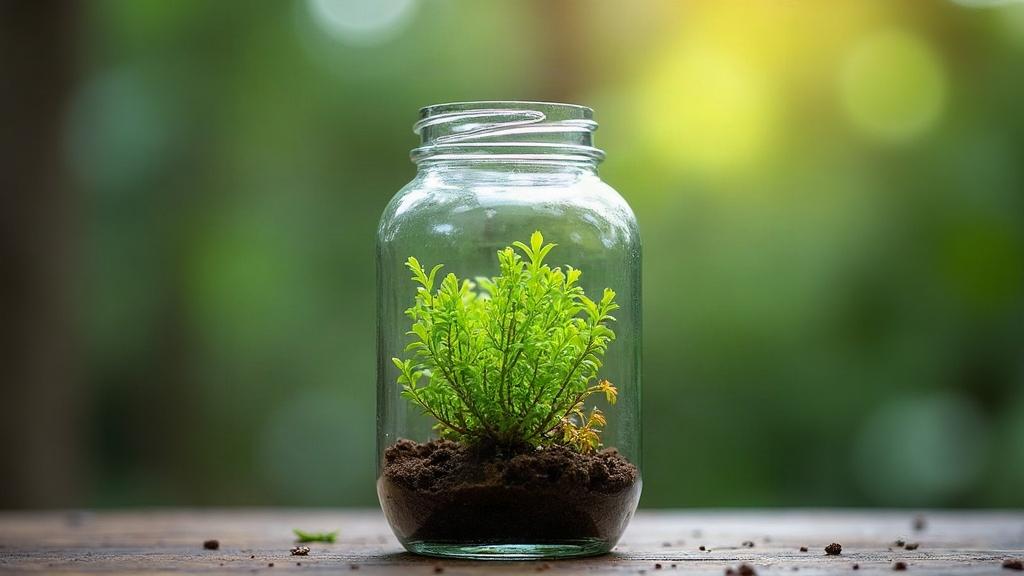
Why Selaginella Uncinata Works So Well in Jars
Selaginella uncinata, better known as peacock moss or blue spikemoss, might be the single best plant you can put in a sealed jar that never sees direct sun. Its shimmering blue-green fronds seem to glow under the diffused light inside a closed vessel, which is exactly why it turns up so often on windowsills, office desks, and shelves nowhere near a window. Here’s how to actually set one up and keep it alive for the long haul.
Technically it isn’t a moss at all. Selaginella is a spikemoss, a vascular plant more closely related to ferns, but it acts like moss in every way that matters: it loves shade, it loves damp air, and it hates being dried out. Three things make it a natural fit for jar culture.
- Shade tolerance: In the wild it grows on forest floors under heavy canopy cover, so a dim corner of your living room is basically home turf.
- Humidity dependence: Its fronds are thin and lose moisture fast in open air, but in a closed, humid jar they stay lush indefinitely.
- Slow, creeping growth: It spreads sideways instead of shooting up, so even a modest-sized jar can host it for years without a repot.
Choosing the Right Jar
Almost any clear glass container with a lid will do, but the shape and clarity matter more than people expect.
- Apothecary jars or cookie jars with wide mouths are the easiest to work in, planting and pruning are far less fiddly.
- Repurposed pickle or coffee jars work fine on a budget, just scrub them out well first (a lingering vinegar smell is not what you want).
- Skip colored or tinted glass. It blocks the small amount of ambient light the plant is relying on.
- A lid or stopper isn’t optional. Selaginella uncinata struggles in open terrariums unless the room itself is already very humid, which most homes aren’t.
Building the Layered Substrate
In a sealed jar, water has nowhere to evaporate to, so a proper drainage layer is what stands between you and root rot.
- Drainage layer (1-2 inches): LECA balls, small pebbles, or plain aquarium gravel.
- Barrier layer: A thin sheet of horticultural charcoal to keep the water fresh and odor-free, topped with a layer of sphagnum moss so the soil above doesn’t wash down into the drainage stones.
- Growing medium (2-3 inches): Mix peat-free potting soil, orchid bark, and perlite in roughly equal thirds. It holds moisture well without turning into swamp.
Planting and Initial Setup
- Break a small clump of Selaginella uncinata into pieces roughly the size of a coin, no bigger.
- Press each piece onto the soil surface rather than burying it. This species roots from stem contact with moist soil, not from being planted deep.
- Decorate with a few small stones or a piece of driftwood if you like, but don’t crowd things. Tight, airless clusters of foliage are where mold starts.
- Mist everything thoroughly once planted, aiming for evenly moist soil, not standing water.
Light Requirements
This is where most beginners go wrong. “Low light” gets misread as “no light,” and that’s a mistake.
- Set the jar 3-6 feet from a north- or east-facing window, or somewhere with steady, bright indirect light.
- No good window nearby? A small LED grow light, even something modest like 6-8 watts, running 10-12 hours a day on a timer works just as well.
- Never put the jar in direct sun. A closed jar in a sunbeam turns into a mini-oven, and it can cook the plant in a matter of hours, not days.
Watering and Humidity Management
A well-sealed, well-built jar can coast for weeks between waterings. That’s the whole appeal.
- After the first misting, keep an eye on condensation. A light morning fog that burns off by afternoon is exactly what you want to see.
- Heavy, constant fogging on the glass? Crack the lid for a few hours to vent the extra moisture.
- Bone-dry glass with no fog at all means it’s time to mist lightly, every few days, until things settle back into balance.
- Stick to distilled or rainwater. Tap water leaves behind mineral deposits that show up as chalky white spots on the glass and even on the leaves, not a great look.
Common Problems and Fixes
- Browning tips: Usually a sign of low humidity or too much light. Move it to a shadier spot and double-check the lid seal.
- Mold or fungus: Pull out the affected foliage right away, prop the lid open for a day to get airflow moving, and ease off on watering.
- Leggy, sparse growth: Almost always means not enough light. Add a grow light before the whole plant thins out.
- Yellowing at the base: This is just old growth dying back naturally. Trim it out and the jar looks tidy again.
Long-Term Maintenance
- Trim back vigorous growth every couple of months so it doesn’t swallow the jar or crowd itself out.
- Every so often, run a cotton swab over the inside glass to clear off mineral spots or algae film.
- Repotting is rarely necessary. A single jar setup can carry Selaginella uncinata for years, needing nothing more than the occasional top-up of soil.
Set it up right once, with good drainage, filtered light, and a humidity balance that isn’t too swampy or too dry, and this little peacock moss will sit there glowing blue-green in its jar for years, asking almost nothing of you in return.