Best Low-Light Ferns That Actually Survive in a Sealed Jar
Best Low-Light Ferns That Actually Survive in a Sealed Jar
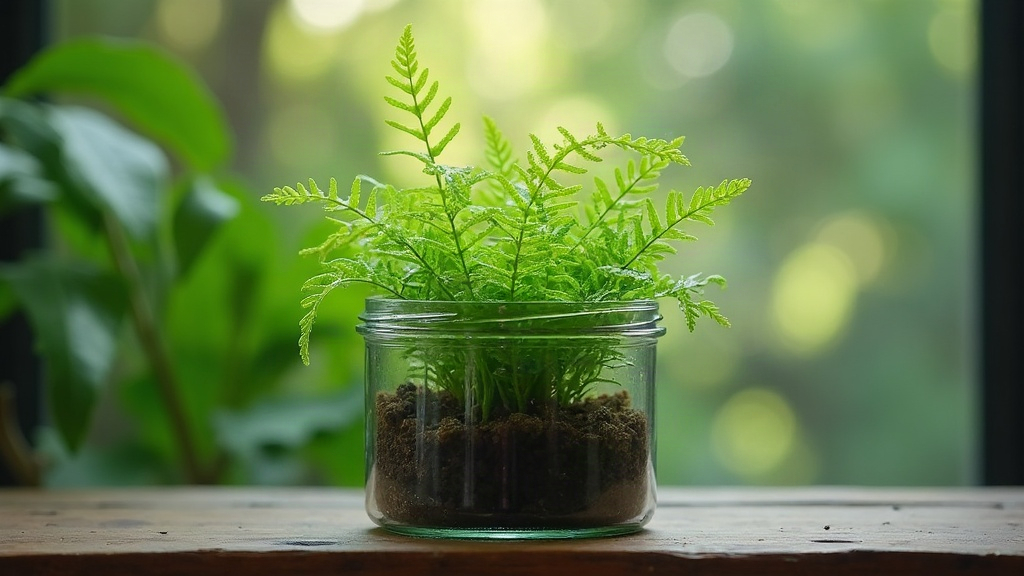
A sealed jar is basically a rainforest shrunk down to fit on a shelf: 100% humidity, dead-still air, and zero drainage holes. Drop the wrong houseplant in there and it rots within weeks, sometimes days. But ferns? The right ones treat that glass like a spa day that never ends. The trick isn’t picking anything labeled “low light” at the nursery, it’s choosing compact, shade-tolerant species that genuinely crave moisture. Below are the ferns that hold up for months, often years, inside a closed terrarium, along with the setup habits that keep them from turning to mush.
Why Ferns Win Inside a Sealed Jar
Ferns spent millions of years evolving on dim, damp forest floors, so a closed jar actually mimics their real habitat better than a regular pot on a windowsill ever could. The glass traps moisture and cycles it endlessly from soil to air and back. Practically, that means:
- No daily misting. Whatever water you pour in at the start pretty much stays in the loop.
- Stable humidity. Great news for fronds that crisp up and brown at the edges the moment indoor air gets dry.
- Low, filtered light does the job. Direct sun through glass will literally cook everything inside, so a bright, indirect spot is what you actually want, not a sunny sill.
Here’s the catch, though: a sealed jar is a closed loop, so every mistake gets amplified. Too much water, the wrong soil, a fern that’s simply too big for the space, any of these compound fast. Get the species right, though, and the jar almost takes care of itself.
The 6 Best Low-Light Ferns for Sealed Jars
1. Lemon Button Fern (Nephrolepis cordifolia ‘Duffii’)
Probably the single best starter fern for a closed terrarium, full stop. This dwarf Boston fern relative stays under 30 cm, grows neat little round leaflets, and doesn’t flinch at the constant humidity that would rot out bigger varieties within a month. It spreads slowly through runners, filling in bare soil without ever taking the jar hostage.
- Why it works: compact, moisture-loving, forgives low light without complaint
- Watch for: the odd yellow frond here and there, just trim it off to keep air moving through the canopy
2. Button Fern (Pellaea rotundifolia)
Dark, round, almost leathery leaflets give this one a totally different texture from most ferns. It also tolerates dry spells better than the rest of this list, which is a nice insurance policy if your jar ever runs a little low on moisture between check-ins. Stays under 25 cm and grows at a snail’s pace, so it won’t sneak up on you.
- Why it works: drought-tolerant for a fern (a rare trait), genuinely happy in shade
- Best for: small jars, first-time terrarium builders
3. Korean Rock Fern (Polystichum tsus-simense)
Compact and structured, with dark green fronds on near-black stems. It holds its shape well even in low light and doesn’t mind a cool room, which makes it a solid choice for a jar sitting away from any window at all.
- Why it works: slow-growing, sturdy, actually tolerates dim corners rather than just surviving them
- Note: give it some vertical room since the fronds tend to arch upward as they mature
4. Maidenhair Fern (Adiantum raddianum)
Everyone’s heard maidenhair is “impossible” to keep alive as a houseplant. Turns out that reputation only applies outside a jar. Inside a sealed terrarium it’s almost easy, because it wants constant, even moisture, which is exactly what the closed system delivers around the clock. The delicate, fan-shaped fronds on wiry black stems look genuinely striking pressed up against glass.
- Why it works: thrives on the steady humidity a sealed jar provides
- Watch for: it wants a touch more light than the others on this list, so keep it in bright indirect light, never anywhere near direct sun
5. Crocodile Fern (Microsorum musifolium)
Named for its textured, reptile-scale fronds, and it’s not subtle about it. This one thrives in the warm, still air a closed jar creates. It grows slowly enough to stay manageable and adds a completely different visual texture than the feathery ferns above. In the wild it grows as an epiphyte, so mounting it on a piece of wood or bark inside the jar suits it well.
- Why it works: loves heat and humidity, naturally epiphytic so it doesn’t need much soil
- Best for: larger jars, since those broad fronds need elbow room
6. Silver Lace Fern (Pteris ensiformis ‘Evergemiensis’)
A genuine low-light specialist, and the variegated white-and-green fronds brighten up a dim corner more than any other fern on this list. It stays petite and compact, so small and medium jars both work fine. Bonus: the crisp variegation acts like a built-in health gauge, since fronds fade out if the light is truly too low.
- Why it works: thrives in shade, small footprint, striking color contrast
- Note: prune the older fronds so the variegation stays sharp instead of washing out
Setup Rules That Make or Break a Sealed Jar
Even the best fern on this list will die in a badly built jar. A few non-negotiables:
- Drainage layer first. 2 to 3 cm of pebbles or LECA at the bottom, then a thin layer of activated charcoal on top of that to keep the air fresh and hold mold at bay.
- Light, airy substrate. Mix potting soil with perlite and a bit of sphagnum moss. Heavy garden soil compacts fast in a closed jar and basically suffocates the roots.
- Plant small. Choose ferns with room left to grow. A fern touching the glass on all sides traps condensation right against the leaves and invites rot almost immediately.
- Water once, then wait. Moisten the soil until it’s damp, never soggy. Seal the jar and watch it: a light morning fog that clears by afternoon is exactly right. Heavy condensation that never lets up means you overdid it, so crack the lid open for a few hours.
- Place it in bright, indirect light. A north- or east-facing spot, or a few feet back from a window, works well. Direct sun is a hard no.
Common Mistakes to Avoid
- Choosing a giant fern. Boston and bird’s nest ferns will eventually outgrow even a large jar and block out the light entirely. Stick to the dwarf, compact species above.
- Overwatering at setup. Since the sealed system recycles every drop, almost everyone adds too much water the first time. Start drier than feels right.
- Sealing the lid too soon. Leave it off for the first few days so the little ecosystem settles in, then seal once the condensation pattern stabilizes.
- Ignoring mold. A bit of white fuzz on wood or soil early on is completely normal. Wipe it away, add springtails as a cleanup crew if you’re up for it, and let the jar breathe for an hour or two.
Conclusion
The best low-light ferns for a sealed jar aren’t the showy ones catching your eye at the garden center. They’re the compact, humidity-loving dwarfs, lemon button, button, Korean rock, that treat a closed terrarium like home rather than a hazard. Pair any of them with a proper drainage layer, light airy soil, and bright-but-indirect light, and you end up with a self-sustaining little green world that asks almost nothing of you. Start with one or two forgiving species, resist the urge to drown them on day one, and let the jar find its own rhythm.