Best Budget Grow Lights for a 12-Inch Cube Terrarium
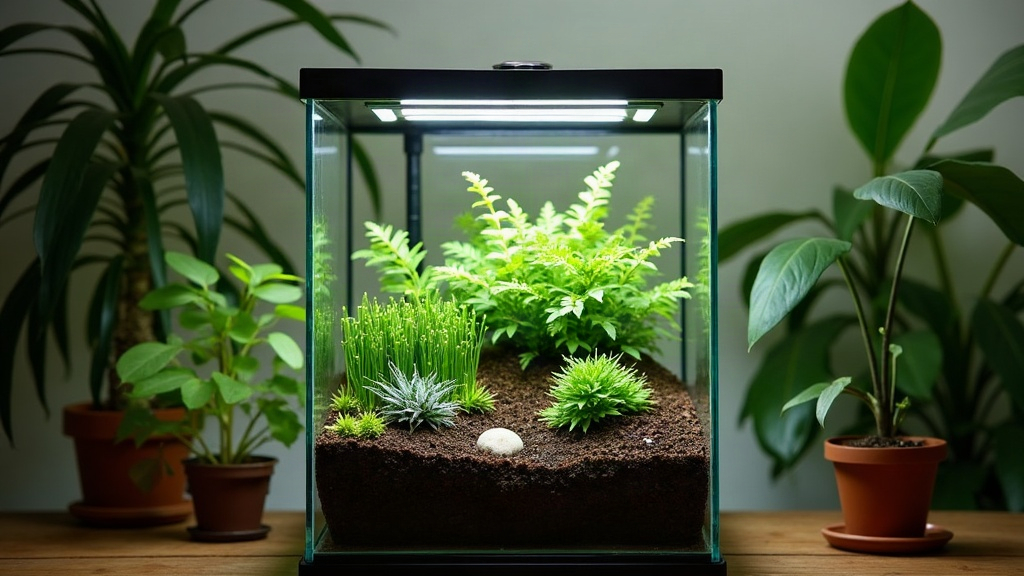
If you’ve got a 12-inch cube terrarium (the classic size for nano bioactive builds, dart frog vivariums, small carnivorous plant setups) you really don’t need to drop $200 on a commercial fixture to keep moss, pothos, or Venus flytraps happy. The budget sweet spot here is compact full-spectrum LED clip lights or bar fixtures, 10 to 20 watts, putting out 300-800 PAR at substrate level. Enough to grow plants well, not enough to cook your enclosure (or your wallet).
Why 12-Inch Cubes Need Special Lighting Consideration
A 12x12x12 cube sits in an awkward middle ground. Standard aquarium hoods and big grow panels are flat-out overkill, and they tend to run hot or blast out enough light to scorch leaves pressed up against the glass. On the flip side, those cheap “decorative” LED strips sold for aquarium ambiance almost never hit the intensity plants need to actually photosynthesize. They look nice. They don’t grow anything.
So what are you actually looking for? A fixture that:
- Fits a 10-14 inch footprint without hanging off the edges
- Puts out full-spectrum light, not just the blue/pink aquarium look
- Stays cool enough to sit right against glass or mesh lids
- Costs under $40
Top Budget Picks
1. Clip-On Full Spectrum LED Grow Lights (8-12W)
These gooseneck clip lights, usually marketed toward succulent owners or people starting seedlings, are probably the most common budget pick among terrarium keepers. Brands like GooingTop, Roleadro, and a dozen generic Amazon “plant grow light” clips run around $15-25.
Why they work: That bendy gooseneck arm means you can aim light straight down onto a moss carpet or a cluster of low plants instead of just bathing the whole tank evenly. Most also come with adjustable brightness and a built-in timer, which matters more than people think. A consistent day/night cycle beats remembering to flip a switch every morning.
Watch out for: diodes that lean hard into purple or magenta. If a listing doesn’t mention “full spectrum” and a color temperature somewhere around 5000-6500K, skip it. That range grows plants well and still looks natural to your eye, rather than turning your terrarium into a nightclub.
2. Mini Aquarium Bar Lights (Nicrew, Hygger Nano Series)
Nano aquarium lights made for 5-10 gallon tanks happen to fit a 12-inch cube almost perfectly. The Hygger nano clip light and the Nicrew Skyled mini are the two people mention most often, typically $20-35.
Why they work: these were built to survive sealed, humid tanks, so they shrug off terrarium condensation in a way craft-store grow lights usually can’t. A lot of them also give you RGB plus white channels, so you can push red/blue for growth while still keeping the display looking good when you’re just watching your frogs.
3. Repurposed USB LED Grow Strips
If you’re working with under $15, a USB-powered grow strip meant for a desk plant can simply get zip-tied to the inside rim of a mesh lid. Low output, sure, but that’s fine for moss, pothos, and shade-tolerant ferns. And it costs almost nothing to run.
Limitation: don’t expect this to carry flowering plants or anything demanding. True carnivorous plants like sundews need strong light just to develop their red coloration, and a USB strip won’t get you there.
How Much Light Does Your Terrarium Actually Need?
- Moss, ferns, pothos, low-light tropicals: 150-300 PAR, 8-10 hours a day
- Venus flytraps, sundews, pitcher plants: 400-800 PAR, 12-14 hours a day
- Flowering orchids or bromeliads: 300-500 PAR, 10-12 hours a day
Notice your moss turning brown and crispy, or plants stretching awkwardly toward the light source? That’s legginess, and it usually means you need more intensity or a closer light, not a pricier one.
Budget Setup Tips
- Grab a mechanical timer ($8-10) instead of switching lights on and off by hand. Consistency matters more than raw intensity for most terrarium plants.
- Mount lights 4-6 inches above the canopy. Any closer and clip lights without diffusers will scorch leaves fast.
- Skip incandescent bulbs or plain household white LEDs. They’re missing the red/blue ratio plants actually use for photosynthesis, no matter how bright they look to us.
- Two cheap lights beat one expensive one when your planting is dense. A pair of $15 clips covering different angles handles shaded pockets better than a single $60 fixture blasting straight down.
Final Verdict
For most 12-inch cube terrariums, a clip-on full-spectrum LED in the 8-12W range plus a basic timer is the best money you’ll spend, usually $25-35 total. If your build doubles as a sealed, humid vivarium, step up to a nano aquarium bar light designed to handle condensation. Save the premium commercial grow panels for the bigger tanks down the line. At this scale, a cheap LED does the job just as well.